
Your needs, this model
Does it fit your priorities?
Would a second, smaller stainless bowl save a wash between a main batter and its frosting?
The exact KSM150TBCU page lists both a 5-quart and a 3-quart stainless-steel bowl. They are used in separate mixing steps; the mixer still operates one bowl at a time.
Explore this need in the finder →Is a coated flat beater, rather than a pastry beater or scraper, the included beater you need?
The KSM150TBCU box list names a coated flat beater, coated dough hook, six-wire whip and shield. It does not list a flex-edge beater, pastry beater or separate pastry scraper.
Explore this need in the finder →Does the five-quart bowl confirm a specific bread-flour maximum?
No. The linked KSM45–KSM200 guide limits yeast-dough preparation to speed 2 but supplies no universal white-flour quantity for this model. Treat a numeric flour threshold as unknown until an exact source states one.
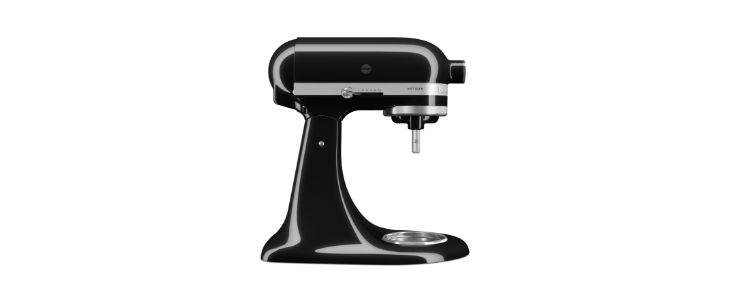
Explore this need in the finder →The KSM150TBCU is KitchenAid’s Contour Silver Value Bundle version of its 5-quart tilt-head Artisan mixer. Its point of difference is an additional 3-quart stainless bowl—not a larger motor or second mixer. The exact U.S. product page lists the 5-quart bowl, smaller bowl, coated flat beater, coated dough hook, six-wire whip, and pouring shield. That package makes the most sense when your routine regularly moves from a main mixture to a smaller one, such as cake batter followed by frosting.
The extra bowl changes the sequence, not the machine
KitchenAid describes the 3-quart bowl as useful for smaller jobs and a second component. You can mix frosting in it, set it aside, and then use the 5-quart bowl for the cake. You still attach one bowl at a time to a single tilt-head base, so the bundle saves a bowl wash; it does not make two mixes simultaneously or shorten the mixer’s actual mixing cycles. If small batches are rare, the extra bowl may become another item to store rather than a daily convenience.
The manufacturer gives cookie examples for each size: up to nine dozen for the 5-quart bowl and five dozen for the 3-quart bowl, both footnoted as 28-gram cookie dough using the flat beater. Treat those as KitchenAid’s stated examples, not independent performance tests or a promise that every recipe produces the same count. More importantly, those cookie examples say nothing about bread capacity. A bowl’s volume alone cannot establish a safe yeast-dough batch size.
Standard tools rather than the premium pastry kit
This bundle’s listed tools are intentionally straightforward: a coated flat beater for many cake, cookie, and batter jobs; a coated dough hook for yeast dough; a wire whip for mixtures that need air; and a pouring shield. The exact page also describes a tilt head for easier access to the bowl and ten speeds. KitchenAid lists optional hub-powered attachments separately, so a pasta roller, grinder, or other hub accessory should not be treated as part of this box.
That list is important when comparing it with similarly sized Artisan offers. The KSM150TBCU page does not list a flex-edge beater or pastry beater. If you specifically want a scraper edge built into a beater or the separate pastry tool for cutting butter into flour, compare a different exact package: some KSM195 premium bundles list those parts, while the KSM150TBCU box list does not. It is a cleaner fit for someone who wants the second bowl and ordinary core tools without choosing a package for specialty pastry accessories.
Keep yeast-dough expectations tied to the guide
The linked W11668794A product guide covers the KSM45 through KSM200 range, which includes this KSM150 model. Its instruction is direct: do not exceed speed 2 when preparing yeast dough, because faster operation may damage the mixer. Use the supplied hook and follow the applicable recipe, but do not convert the 5-quart bowl label or cookie counts into a flour maximum. The exact page and the guide do not provide a universal white-flour quantity for this configuration, so anyone for whom a documented numeric bread limit is essential should choose only a model with that exact manual evidence.
The extra bowl is useful for whipping or frosting in a separate step, but the guide’s wire whip care still matters: it is hand-wash only, while the listed stainless bowls and several coated tools are top-rack dishwasher-safe. Switch the mixer off, unplug it before cleaning or changing attachments, and wipe the mixer body rather than immersing it. Those are small ownership details, but they matter more than the number of optional attachments a compatible hub can accept.
Who should choose this bundle?
Choose KSM150TBCU if you want a five-quart tilt-head Artisan, value having a three-quart bowl ready for a second recipe component, and expect to use the coated flat beater, hook, whip, and shield. Look at a simpler single-bowl Artisan if the extra bowl would rarely leave the cupboard. Consider a premium package only if you will use its additional pastry-oriented tools; package names that share “Artisan” or “two bowl” language do not guarantee the same accessory list. If frequent dense or large bread batches are your first priority, compare operating guidance and exact bowl-lift configurations rather than assuming this five-quart label answers the capacity question.
For package identification, check KitchenAid’s exact KSM150TBCU product page, not only a family-level Artisan listing. Its linked W11668794A product guide sets the yeast-dough speed ceiling and care details; the W11668787B owner instructions cover household operation and safety. Verify the full model code on any offer because neighboring Artisan packages differ in bowls and included tools.
Key details at a glance
| Mixer arrangement | Tilt-head |
|---|---|
| Bowl capacity | 5 qt |
| Bowl material | Stainless steel |
| Selectable speeds | 10 |
| Included tools | 5-quart stainless-steel bowl / 3-quart stainless-steel bowl / Coated Flat Beater / Coated Dough Hook / 6-Wire Whip / Pouring Shield |
| Powered attachment hub | Yes |
| Bowl dishwasher guidance | Yes |
Use the exact model’s instructions for operating limits, supplied equipment and version differences.
Sources for this assessment
Start with the way you mix.
Compare head movement, bowl capacity and the included tools before you add optional attachments.